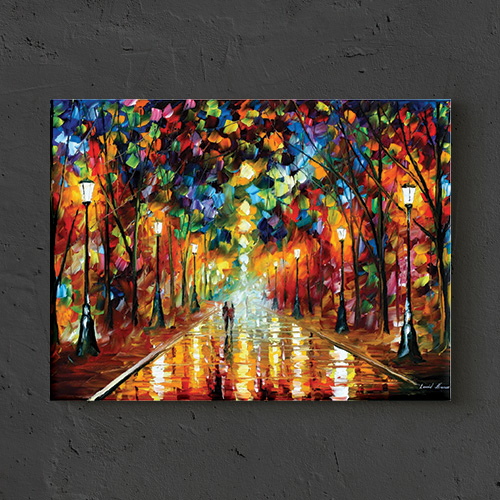
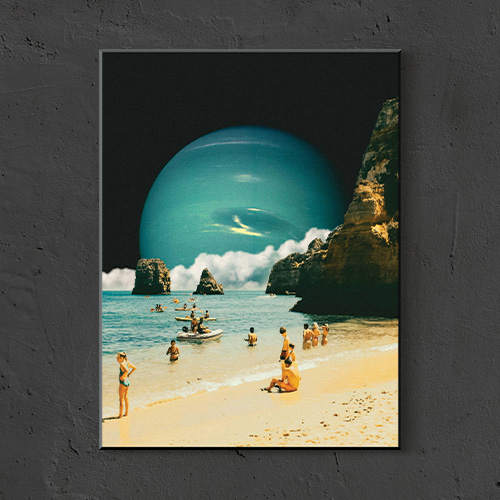
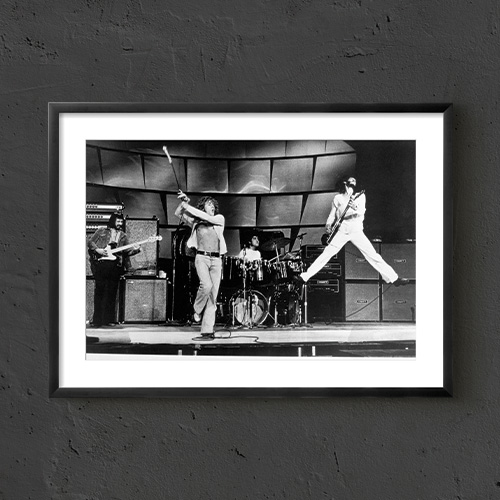
This giclée print delivers a vivid image with maximum color accuracy and exceptional resolution. The standard for museums and galleries around the world, giclée (French for “to spray”) is a printing process where millions of ink droplets are sprayed onto the paper’s surface. With the great degree of detail and smooth transitions of color gradients, giclée prints appear much more realistic than other reproduction prints. The high-quality paper (235 gsm) is acid free with a smooth surface.


This premium giclée print, an upgrade from the standard giclée print, is produced on thick (310 gsm), textured watercolor paper made from alpha cellulous wood pulp that is acid free. It shares the same vivid colors, accuracy, and exceptional resolution that make giclée prints the standard for museums and galleries around the world. Giclée (French for “to spray”) is a printing process where millions of ink droplets are sprayed onto a high-quality paper. The smooth transitions of color gradients make giclée prints appear much more realistic than other prints.
falsediv_lc_sb_pp_01|http://cache1.allpostersimages.com/images/INTL/allposters/ie/en/livechat/LiveChatBTN.gif |http://chat.art.com/WebChat/Main.aspx?QueueName=WWW.ALLPOSTERS.IE&langiso=en&countryiso=IE |ProductPage |Available Chat Link Clicked |44799 |http://cache1.allpostersimages.com/images/INTL/allposters/ie/en/livechat/spacer.gif |img_lc_sb_pp_01
Add to Cart
1592723837901401592723f6040cc7410d4590b006bb5155cd3c1e978EUR12cmWall ColorSelect your Wall ColorDisplaying of Don't see the frame you like?Frame it yourselfFramed Art Print
A founder of Impressionism, Claude Monet (1840 – 1925) broke free from the confines of traditional art to evolve into a groundbreaking landscape painter. Part of a series painted to capture a scene in various phases of daylight, his “Japanese Bridge,” features a wooden footbridge spanning his Giverny home’s lily pond. The beautiful water landscape is given the remarkable depth of a view seen through a window.
This giclée print delivers a vivid image with maximum color accuracy and exceptional resolution. The standard for museums and galleries around the world, giclée (French for “to spray”) is a printing process where millions of ink droplets are sprayed onto the paper’s surface. With the great degree of detail and smooth transitions of color gradients, giclée prints appear much more realistic than other reproduction prints. The high-quality paper (235 gsm) is acid free with a smooth surface.
About the Artist
Claude Monet (1840 – 1952) pioneered Impressionism, profoundly influencing landscape painting. From Paris, Monet met the nucleus of his Impressionist group while attending the studio of Glenyre. Making a break from established painting techniques, Monet captured the fleeting effects of time of day, atmosphere and season upon color and light. Like a prism, his artwork broke color into individual elements, and completely lacked black and gray tones. Monet often painted the exact same view numerous times to depict changing light and weather conditions. Refining the portrayal of natural light’s transient effects, his work broke ground for 20th century modernism.